Open source RGB lighting control that doesn't depend on manufacturer software


One of the biggest complaints about RGB is the software ecosystem surrounding it. Every manufacturer has their own app, their own brand, their own style. If you want to mix and match devices, you end up with a ton of conflicting, functionally identical apps competing for your background resources. On top of that, these apps are proprietary and Windows-only. Some even require online accounts. What if there was a way to control all of your RGB devices from a single app, on both Windows and Linux, without any nonsense? That is what OpenRGB sets out to achieve. One app to rule them all.


Version 1.0rc2, additional downloads and versions on Releases page

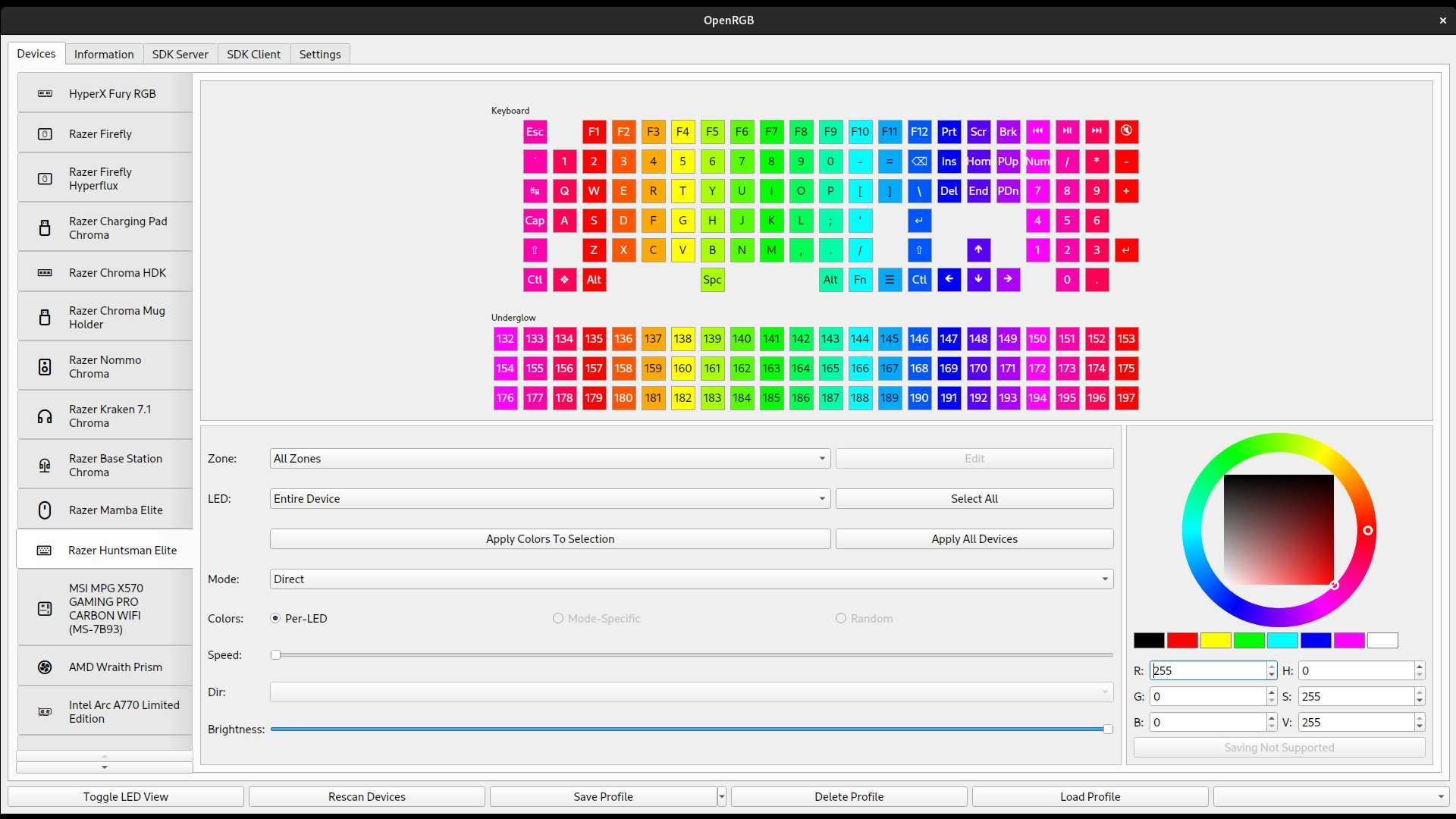
OpenRGB user interface

Control RGB without wasting system resources

Lightweight User Interface

OpenRGB keeps it simple with a lightweight user interface that doesn't waste background resources with excessive custom images and styles. It is light on both RAM and CPU usage, so your system can continue to shine without cutting into your gaming or productivity performance.
OpenRGB rules them all

Control RGB from a single app

Eliminate Bloatware

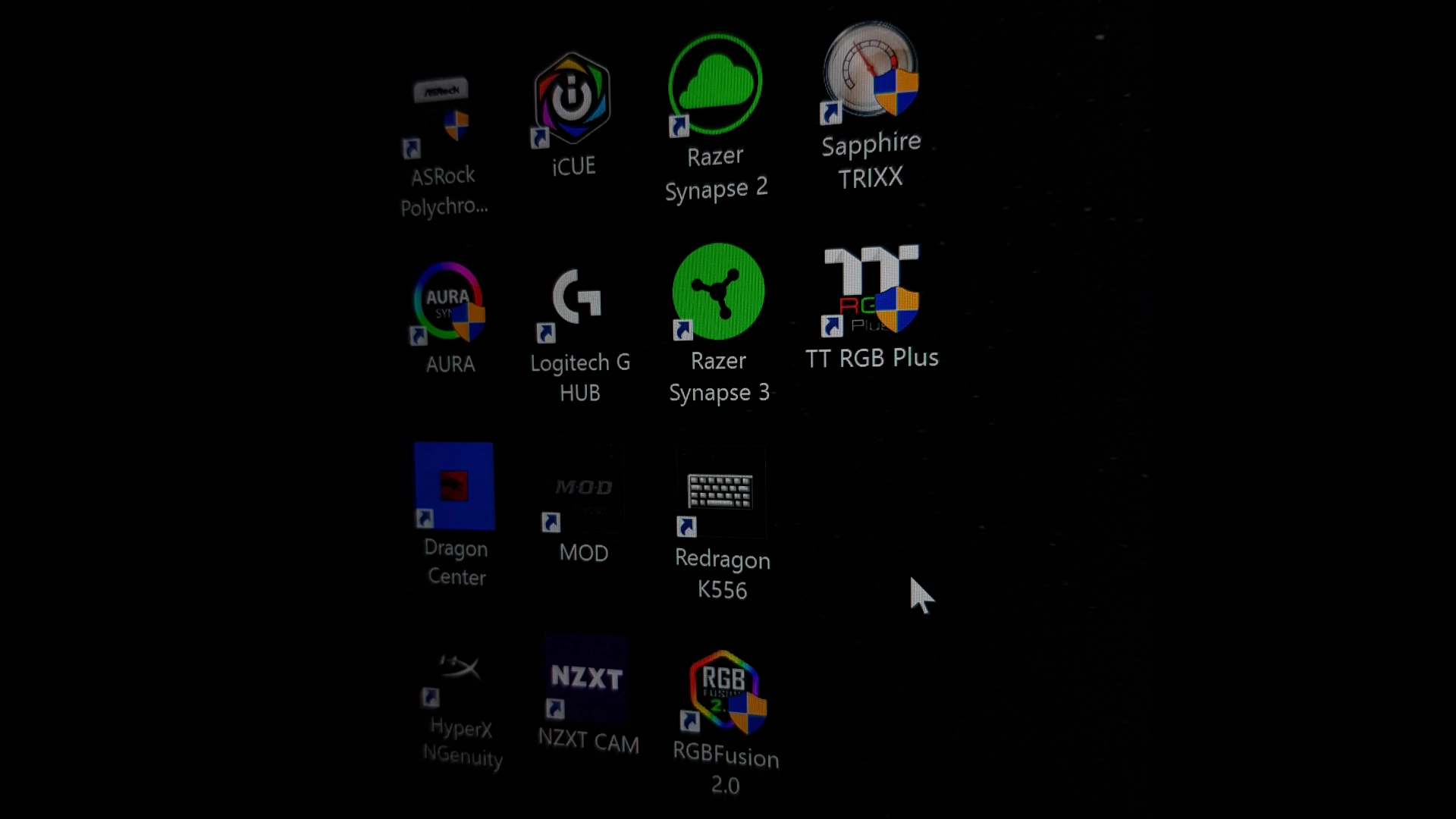
If you have RGB devices from many different manufacturers, you will likely have many different programs installed to control all of your devices. These programs do not sync with each other, and they all compete for your system resources. OpenRGB aims to replace every single piece of proprietary RGB software with one lightweight app.

OpenRGB is open source software

Contribute your RGB devices

Open Source

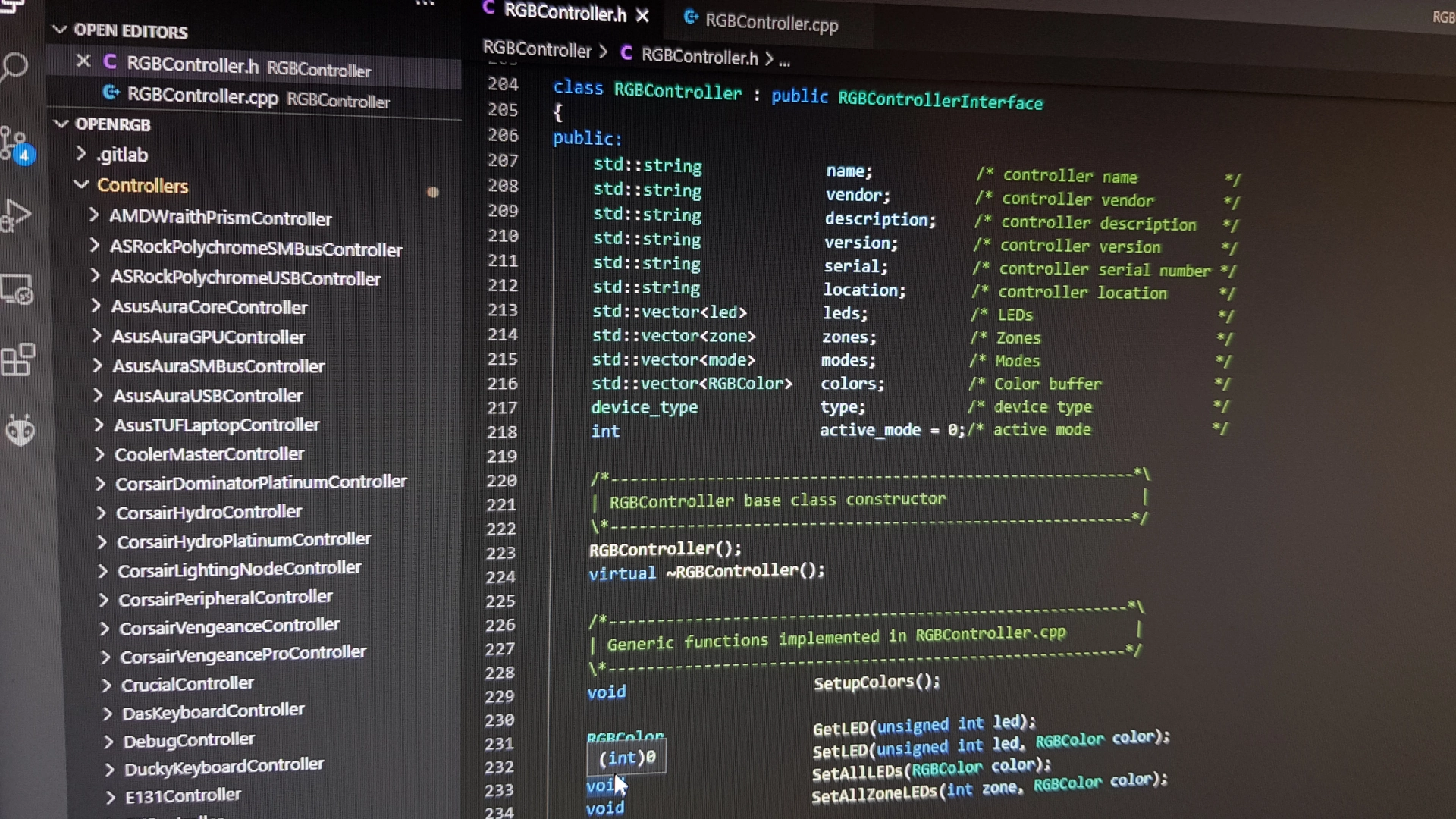
OpenRGB is free and open source software under the GNU General Public License version 2. This means anyone is free to view and modify the code. If you know C++, you can add your own device with our flexible RGB hardware abstraction layer. Being open source means more devices are constantly being added!


Check out the source code on GitLab
OpenRGB is Cross-Platform

Control RGB on Windows, Linux, and MacOS

Cross-Platform

OpenRGB runs on Windows, Linux and MacOS. No longer is RGB control a Windows-exclusive feature! OpenRGB has been tested on X86, X86_64, ARM32, and ARM64 processors including ARM mini-PCs such as the Raspberry Pi.

11 : The Land Where A Hero Once Lived Access

Inari dismisses Naruto and Sasuke's training as futile, sparking a clash between Naruto's "never give up" attitude and Inari's deep-seated cynicism. Visual Resources

The episode highlights the extreme poverty and hardship the citizens of the Land of Waves face under the oppressive rule of Gatō , a billionaire shipping magnate who controls all imports. 11 : The Land Where a Hero Once Lived

Meanwhile, Naruto and Sasuke continue their grueling Tree Climbing Practice to master chakra control, motivated by their rivalry to get stronger. Inari dismisses Naruto and Sasuke's training as futile,

Kaiza was eventually executed by Gatō in front of the village to crush their spirit. This event traumatized Inari, leading to his belief that hard work and heroes are meaningless. Key Plot Developments Kaiza was eventually executed by Gatō in front

The "hero" referenced in the title is Kaiza , Inari's stepfather. He was a traveling fisherman who became a symbol of hope for the village after saving Inari from drowning and standing up to Gatō.

"" is the 11th episode of the original Naruto anime series. It focuses on the Land of Waves arc , providing deep backstory for the country’s current state of despair and the personal tragedy of a young boy named Inari . Episode Core Themes