Like much of their work, this track is part of a larger debate in Romania known as "manelizare"—the fear among some intellectuals that society is being "infected" by the ethics and aesthetics of manele .
The lyrics of "Răul Răilor" follow the genre's tradition of addressing "smecherie" (street smarts/power) and the "dușmani" (enemies).
The collaboration between Ioniță and Salam represents a "golden era" of manele that bridged the gap between underground Roma culture and mainstream success.
The song addresses the "tamtam" or gossip surrounding the artist's success. In the context of Romanian society, where manele is often marginalized by the "elite," these lyrics serve as a form of civic disobedience and a reclaiming of status for those often ignored by the state. Cultural Impact and Controversy
At its core, "Răul Răilor" is built on the high-energy, Balkan-infused rhythms that Costi Ioniță popularized in the early 2000s. The production blends traditional oriental influences with modern pop sensibilities, a signature style that helped Ioniță transition from a singer to one of Romania’s most influential producers. Florin Salam’s vocal performance provides the emotional weight, using the "lăutărească" tradition to convey a message of dominance and resilience. Themes of Power and Perception
The track (The Evil of Evils), released in 2006 as part of the compilation album Fac Diferența , stands as a seminal work in the Romanian manele genre. Produced by Costi Ioniță and performed alongside the "King of Manele," Florin Salam , the song is more than a commercial hit; it serves as a cultural artifact that illustrates the genre's themes of power, social status, and the complex relationship between the Roma community and mainstream Romanian society. The Architecture of a Manele Anthem
The title functions as a hyperbolic self-proclamation. Rather than literal villainy, it refers to being the "boss of bosses" or the "chief of money," positioning the artist as an untouchable figure in a competitive world.
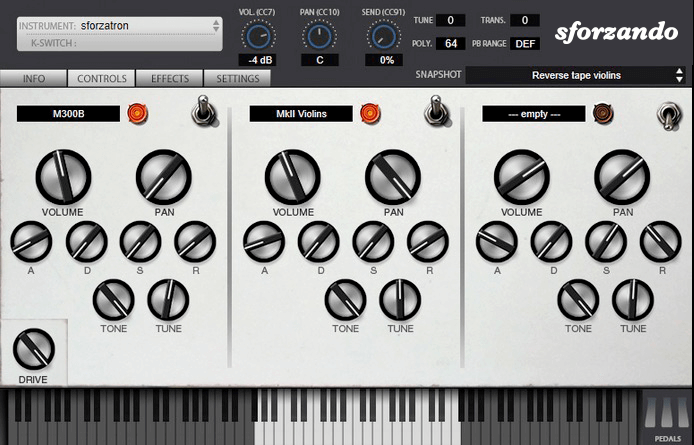
The SFZ Format is widely accepted as the open standard to define the behavior of a musical instrument from a bare set of sound recordings. Being a royalty-free format, any developer can create, use and distribute SFZ files and players for either free or commercial purposes. So when looking for flexibility and portability, SFZ is the obvious choice. That’s why it’s the default instrument file format used in the ARIA Engine.
OEM developers and sample providers are offering a range of commercial and free sound banks dedicated to sforzando. Go check them out! And watch that space often, there’s always more to come! You are a developer and want to make a product for sforzando? Contact us!
You can also drop SF2, DLS and acidized WAV files directly on the interface, and they will automatically get converted to SFZ 2.0, which you can then edit and tweak to your liking!
Download for freeInstrument BanksSupport
Like much of their work, this track is part of a larger debate in Romania known as "manelizare"—the fear among some intellectuals that society is being "infected" by the ethics and aesthetics of manele .
The lyrics of "Răul Răilor" follow the genre's tradition of addressing "smecherie" (street smarts/power) and the "dușmani" (enemies). costi_ionita_florin_salam_raul_railor_oficial_v...
The collaboration between Ioniță and Salam represents a "golden era" of manele that bridged the gap between underground Roma culture and mainstream success. Like much of their work, this track is
The song addresses the "tamtam" or gossip surrounding the artist's success. In the context of Romanian society, where manele is often marginalized by the "elite," these lyrics serve as a form of civic disobedience and a reclaiming of status for those often ignored by the state. Cultural Impact and Controversy The song addresses the "tamtam" or gossip surrounding
At its core, "Răul Răilor" is built on the high-energy, Balkan-infused rhythms that Costi Ioniță popularized in the early 2000s. The production blends traditional oriental influences with modern pop sensibilities, a signature style that helped Ioniță transition from a singer to one of Romania’s most influential producers. Florin Salam’s vocal performance provides the emotional weight, using the "lăutărească" tradition to convey a message of dominance and resilience. Themes of Power and Perception
The track (The Evil of Evils), released in 2006 as part of the compilation album Fac Diferența , stands as a seminal work in the Romanian manele genre. Produced by Costi Ioniță and performed alongside the "King of Manele," Florin Salam , the song is more than a commercial hit; it serves as a cultural artifact that illustrates the genre's themes of power, social status, and the complex relationship between the Roma community and mainstream Romanian society. The Architecture of a Manele Anthem
The title functions as a hyperbolic self-proclamation. Rather than literal villainy, it refers to being the "boss of bosses" or the "chief of money," positioning the artist as an untouchable figure in a competitive world.