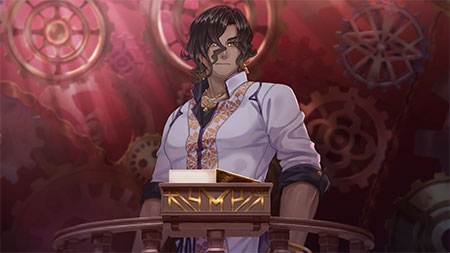
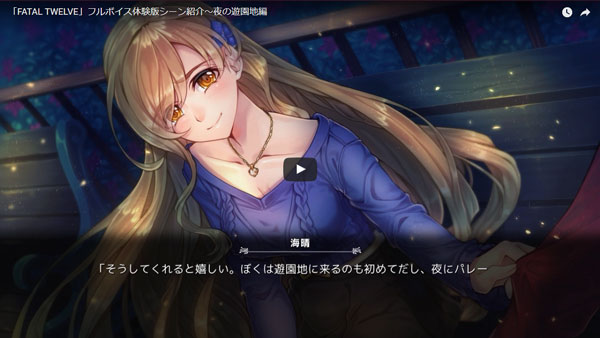
"Good evening, my lovely little slaves to fate."
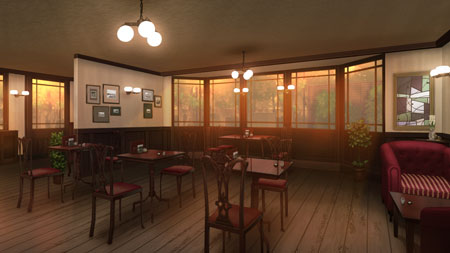
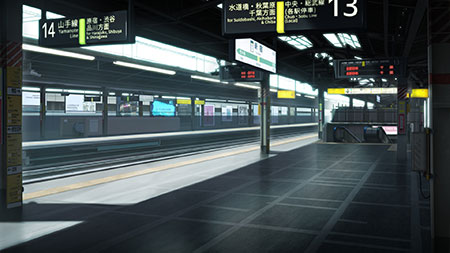
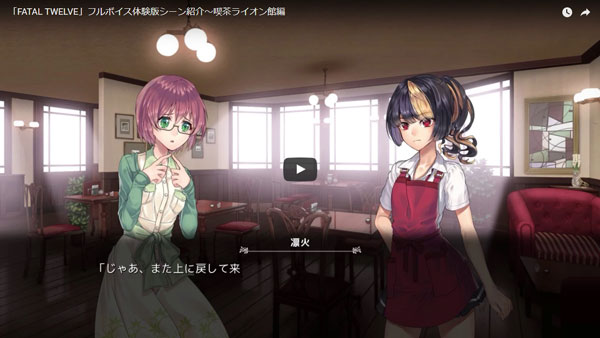
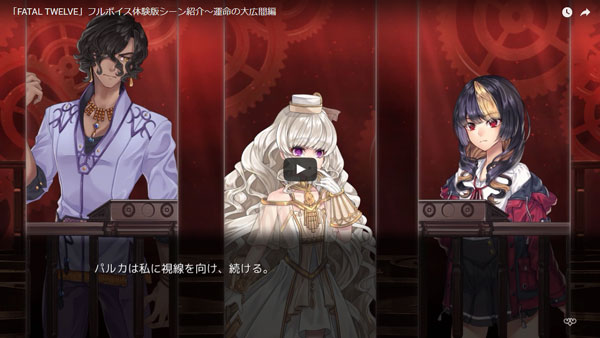
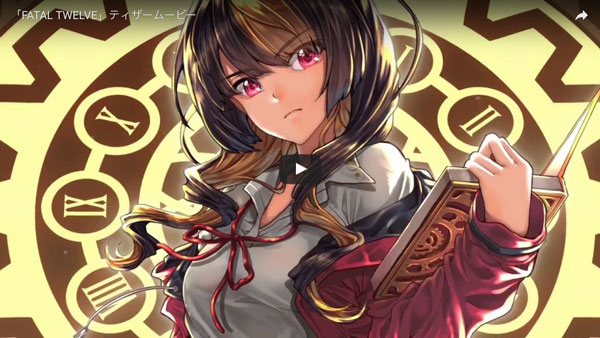
Shishimai Rinka was a highschooler who ran a small café named Lion House in place of her grandmother. She lived her life much like any other person her age, but one day, she was caught up in an explosion while returning home on the train alongside her friend, Hitsuji Naomi. In an attempt to save her friend's life, she shields her on instinct the moment the explosion goes off, losing her life in the process. However, before she knew it, she was back at Lion House, happily chatting with her friends as if nothing had happened in the first place.
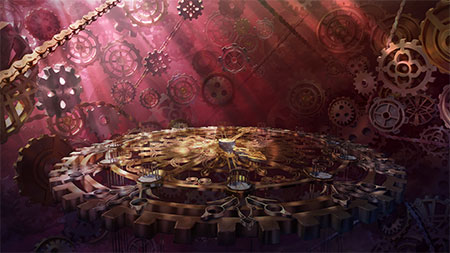
A few days later, she found herself in a strange world. Here she met Parca, an odd girl claiming to be a goddess. It turns out that she had somehow become a participant in Divine Selection, a ritual carried out over twelve weeks by twelve people, which allowed them to compete in order to undo their deaths. What shocked Rinka most of all, however, was the presence of her friend Mishima Miharu amongst the twelve.
In order to make it through Divine Selection, one must eliminate others by gathering information regarding their name, cause of death and regret in the real world, then "electing" them.
This turn of events would lead to her learning about the truth behind her death, as well as her own personal regrets. She would also come to face the reality that Miharu was willing to throw her life away for her sake, as well as the extents to which the other participants would go to in order to live through to the end.
Far more experiences than she ever could have imagined awaited her now, but where will her resolve lead her once all is said and done...?

One of the most transformative features of the v3.0 series is the introduction of a more modular and robust processing engine. Version 3.0.7 specifically benefited from improved hardware acceleration, allowing the software to leverage the parallel processing power of modern GPUs more efficiently. This technical leap addressed one of the primary criticisms of earlier AI enhancement tools: the prohibitively slow render times. Furthermore, the v3.0 architecture introduced the ability to run multiple AI models simultaneously, such as combining stabilization with upscaling in a single pass, which streamlined the post-production pipeline for editors.
Topaz Video AI v3.0.7 represents a significant milestone in the evolution of consumer-grade video enhancement software, blending sophisticated artificial intelligence with a user-centric interface to tackle long-standing challenges in digital cinematography. As a specialized tool focused on upscaling, deinterlacing, and motion interpolation, this version refines the transition from traditional algorithmic processing to neural network-based restoration. By examining its core capabilities, technical architecture, and impact on modern media workflows, one can understand why Topaz Video AI has become a staple for both archival restoration and high-end content creation. [FTUApps.com] - Topaz Video AI v3.0.7 (x64) Por...
Beyond simple upscaling, the software excels in temporal consistency through its "Apollo" and "Chronos" models. These tools handle frame rate conversion and slow-motion synthesis by generating entirely new, mathematically accurate frames between existing ones. In traditional editing, slowing down a video often results in "stuttering" as the same frame is repeated; Topaz Video AI eliminates this by predicting motion paths, creating fluid, high-frame-rate output from standard sources. This capability is invaluable for sports videography and cinematic sequences where high-speed cameras were not originally available. One of the most transformative features of the v3
In conclusion, Topaz Video AI v3.0.7 is more than just an upscaling utility; it is a sophisticated restoration suite that democratizes high-level visual effects. By moving away from simple pixel manipulation toward intelligent image synthesis, it provides a bridge between the low-resolution past and the high-definition present. As AI continues to advance, tools like these will likely become invisible yet essential components of every digital artist’s toolkit, ensuring that no piece of visual history is left behind due to technical limitations. Furthermore, the v3
One of the most transformative features of the v3.0 series is the introduction of a more modular and robust processing engine. Version 3.0.7 specifically benefited from improved hardware acceleration, allowing the software to leverage the parallel processing power of modern GPUs more efficiently. This technical leap addressed one of the primary criticisms of earlier AI enhancement tools: the prohibitively slow render times. Furthermore, the v3.0 architecture introduced the ability to run multiple AI models simultaneously, such as combining stabilization with upscaling in a single pass, which streamlined the post-production pipeline for editors.
Topaz Video AI v3.0.7 represents a significant milestone in the evolution of consumer-grade video enhancement software, blending sophisticated artificial intelligence with a user-centric interface to tackle long-standing challenges in digital cinematography. As a specialized tool focused on upscaling, deinterlacing, and motion interpolation, this version refines the transition from traditional algorithmic processing to neural network-based restoration. By examining its core capabilities, technical architecture, and impact on modern media workflows, one can understand why Topaz Video AI has become a staple for both archival restoration and high-end content creation.
Beyond simple upscaling, the software excels in temporal consistency through its "Apollo" and "Chronos" models. These tools handle frame rate conversion and slow-motion synthesis by generating entirely new, mathematically accurate frames between existing ones. In traditional editing, slowing down a video often results in "stuttering" as the same frame is repeated; Topaz Video AI eliminates this by predicting motion paths, creating fluid, high-frame-rate output from standard sources. This capability is invaluable for sports videography and cinematic sequences where high-speed cameras were not originally available.
In conclusion, Topaz Video AI v3.0.7 is more than just an upscaling utility; it is a sophisticated restoration suite that democratizes high-level visual effects. By moving away from simple pixel manipulation toward intelligent image synthesis, it provides a bridge between the low-resolution past and the high-definition present. As AI continues to advance, tools like these will likely become invisible yet essential components of every digital artist’s toolkit, ensuring that no piece of visual history is left behind due to technical limitations.